Showing posts with label journalism. Show all posts
Showing posts with label journalism. Show all posts
21 August 2015
New storytelling tools can change the game -- take a look at Thinglink


24 June 2015
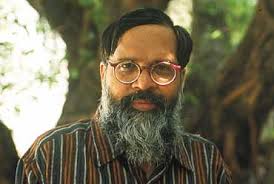
Memories of Praful Bidwai: A spirit of the 60s
In the early 1980s, when I started out in the profession at The Times of India's newsroom in its headquarters in Mumbai (then Bombay), there was an unwritten caste system. Apart from the news desk that edited and made pages, there were reporters who did stories (usually on city, culture, traffic, crime etc) and there slightly exalted correspondents (who covered government affairs). Beyond these in the white-painted steel-and-glass cabins sat the senior editors, then humbly described as "assistant editors"-- the tribe that usually wrote opinion pieces and "leader comments" as the official editorial comments of the newspaper were called.
The reporters were usually the locally educated foot-and-mouth journalists who hung out on their beats.
The "assistant editors" more often than not, were educated overseas, usually in the UK, and not too well informed on how things really worked on the ground in India. They sat with the editor-in-chief in long meetings and wrote brief pieces.
Praful Bidwai was an exception in more ways than one, though his credentials were substantial

Officially, as an IIT dropout (from what I understand), he did not hold an official degree, but in the Indian mind, the dropout status from IIT was high enough. He had been involved in leftist student politics and like many of that era, journalism was a close proxy to further his ideals. But he did not fit into any party or even group as such, as I found out later.
He broke one rule of the newsroom by being an active reporter, his most famous one being on the harmful nuclear radiation in Tarapur. The story caused a furore across India, and can be seen as the forerunner for the protests that ultimately happened over the Koodankulam project in Tamil Nadu.
What I remember at a personal level was that he was a senior one could talk to and look up to. Friendly and compassionate, he had an informal style and was very approachable. He encouraged story ideas on all themes and rarely came across as a firebrand except in his stories and writings.
Leftism was in fashion then everywhere, and he was a product of the 1960s/70s middle class politics -- the kind in which its members felt themselves not to be "aam aadmi" but of a privileged background in a poor country that had lots more poor people that needed help. This elitist leftism had many shades: from people who joined CPM or Naxalite groups to softer variations that simply joined NGOs that helped the underprivileged.
Praful later moved to Delhi where I already was and had responsibilities beyond the armchair journalism that was in fashion earlier. I was now in The Economic Times, across the newsroom floor, and nearly joined the TOI because Praful encouraged me -- but the Bennett, Coleman and Co's bureaucracy ensured that I did not!
 In 1988, he suffered multiple injuries in a horrible car crash and was bed-ridden for months. I remember visiting him at AIIMS and lending him cassettes of classical music (Bhimsen Joshi duly returned) and discovering his other side. This happened even as The Times of India sponsored Bruce Springsteen in a "Concert for Human Rights" tour, which I skipped to visit Praful in the hospital. (Inside story: employees got the passes too late, and we felt bad!).
We lost touch as I moved to economic and corporate reporting far away from Praful's pet themes (or maybe on the wrong side, from his point of view). But I kept bumping into him now and then. I last saw him a few months ago and we decided that we should discuss the world in the light of the Internet and social media. Alas, that never happened.
Looking back, given his talent I feel Praful, if he had traded his trademark Gandhi glasses and rugged beard and kurta for blue suits and ties, could have easily been in a General Electric or IBM, doing great stuff for a great lifestyle. But he was of a different idealistic generation that represented the spirit of the 1960s. In post-modern "non-judgemental" terms, his politics was just a choice. But in another view, it represented a selfless spirit. As a journalist, his Frontline column's title kind of said a lot about what he stood for, with its title, "Beyond the obvious"
In 1988, he suffered multiple injuries in a horrible car crash and was bed-ridden for months. I remember visiting him at AIIMS and lending him cassettes of classical music (Bhimsen Joshi duly returned) and discovering his other side. This happened even as The Times of India sponsored Bruce Springsteen in a "Concert for Human Rights" tour, which I skipped to visit Praful in the hospital. (Inside story: employees got the passes too late, and we felt bad!).
We lost touch as I moved to economic and corporate reporting far away from Praful's pet themes (or maybe on the wrong side, from his point of view). But I kept bumping into him now and then. I last saw him a few months ago and we decided that we should discuss the world in the light of the Internet and social media. Alas, that never happened.
Looking back, given his talent I feel Praful, if he had traded his trademark Gandhi glasses and rugged beard and kurta for blue suits and ties, could have easily been in a General Electric or IBM, doing great stuff for a great lifestyle. But he was of a different idealistic generation that represented the spirit of the 1960s. In post-modern "non-judgemental" terms, his politics was just a choice. But in another view, it represented a selfless spirit. As a journalist, his Frontline column's title kind of said a lot about what he stood for, with its title, "Beyond the obvious"
16 March 2015
Vinod Mehta and CP Kuruvilla : Like George Harrison and Guitar George
 When the demise of celebrated editor Vinod Mehta made it to the front pages of leading newspapers, I could not but help think of how just a few weeks earlier, CP Kuruvilla had passed away quietly in Ernakulam. On Valentine's Day.
The two editors are a study in contrast for journalists of the 1980s vintage. Mehta was all over the place: writing books, attending cocktail dinners, loudly discussing gossip, fighting newspaper owners, hiring glamorous reporters and being glam himself.
Maybe it was natural the Lucknow Boy, being from the city of Nawabs,
The Ernakulam Boy, whose voice barely rose above whispers, is a study in contrast.
Not that "Kuru" as he was known, was not sung after his passing though it was among those who knew him up close. His love of anonymity was his claim to fame as these obituary tributes in The Telegraph , Business Standard and Firstpost would testify.
Both Mehta and Kuru loved their liquor, as the legend goes. But at least one of them was not drunk on fame.
I call it the contrast between George Harrison and Guitar George.
George Harrison was the lead guitarist of The Beatles, and attained world fame, for his music, for his love affairs and his long association with the Hare Krishna cult.
Guitar George is a figure familiar only to those who listened carefully to Dire Straits' rock classic, Sultans of Swing. and its lyrics
Maybe it was natural the Lucknow Boy, being from the city of Nawabs,
The Ernakulam Boy, whose voice barely rose above whispers, is a study in contrast.
Not that "Kuru" as he was known, was not sung after his passing though it was among those who knew him up close. His love of anonymity was his claim to fame as these obituary tributes in The Telegraph , Business Standard and Firstpost would testify.
Both Mehta and Kuru loved their liquor, as the legend goes. But at least one of them was not drunk on fame.
I call it the contrast between George Harrison and Guitar George.
George Harrison was the lead guitarist of The Beatles, and attained world fame, for his music, for his love affairs and his long association with the Hare Krishna cult.
Guitar George is a figure familiar only to those who listened carefully to Dire Straits' rock classic, Sultans of Swing. and its lyrics
Check out Guitar George, he knows-all the chords
Mind he's strictly rhythm he doesn't want to make them cry or sing
They said an old guitar is all he can afford
When he gets up under the lights to play his thing
Kuru, for me, was the Guitar George of Indian journalism. He knew all the chords -- as in knowing every story there was to be known. He kept track of gossip and published the ones that made people sit up. While discussing his brainchild, the famous backchat column "None Of Our Business" he once told me: "If somebody doesn't lose sleep over your story, it is not journalism." Or something to that effect.
The wicked grin in place, a strange mix of adventure and affection, he would tell us reporters what to do, raise his eyebrows in occasional appreciation, and watch us like a mother would watch a toddler -- in silent appreciation or admonition, as the case maybe.
When Arif Mohammed Khan sued me for an election campaign story -- alleging defamation because I quoted his rival saying that Khan had used money power, I received a teleprinter message, terse and funny.
"Congratulations. You have arrived. ....has sued you. For only ...."
I was ready to apologise (in my eagerness to keep the publishers out of unwanted controversy), but I was backed to the hilt.
Kuru would back his reporters like hell. But would not take any nonsense. Journalists who love their bylines got a strange mixed bag from him. If he found the story original, even if you had filed it with a "Staff Correspondent" tag, you would see it displayed well with a byline the next day.
The opposite was also true: a hyped story will get buried, or worse, spiked (killed) -- as we say in the profession.
S.C. Anantharaman, my bureau chief in Business Standard, where Kuru was my deputy editor, called me after his passing. Ailing, weak but still keen to discuss Kuru, he showed me clippings from the good old days. These were about Reliance Industries under the influential Dhirubhai Ambani facing trouble over unauthorised sale of shares overseas. "You sure of the facts?" is all Kuru asked him. The story went on to rock parliament at the height of the much talked about Ambani-Govt nexus of those days.

Ananth also told me how Kuru once published a story on a high court verdict against Kolkata's celebrated industrialist Rama Prasad Goenka. Kuru put it on the front page of Business Standard. All the publisher could suggest was. "You could have put it on the inside page." He was zealously guarding his editorial independence.
And then there is the famous story about how the censor during Indira Gandhi's Emergency rule ordered a story taken off from the front page, and Kuru replaced it with the following lines from Tagore:
Where the mind is without fear and the head is held high
Where knowledge is free
Where the world has not been broken up into fragments
By narrow domestic walls
Where words come out from the depth of truth
Where tireless striving stretches its arms towards perfection
Where the clear stream of reason has not lost its way
Into the dreary desert sand of dead habit
Where the mind is led forward by thee
Into ever-widening thought and action
Into that heaven of freedom, my Father, let my country awake.
But, strangely, Ananth told me about how, when being interviewed for the Business Standard job, Kuru developed cold feet to ask for a salary of Rs 600 per month!
"How can I possibly do that?" Ananth recalls him asking in Malayalam. This was in stark contrast to his pleading for higher salaries for those who worked under him.
His phenomenal memory for stories ("That story is old, it appeared on page 7, column 3 of xxx last week") would keep reporters from fooling him.
But, as I recall, when I filed a story about ANZ Grindlays bank desperately borrowing money to cover a big amount in the now infamous Harshad Mehta scandal I found my story as the lead the next morning.
"Is it on Page 1?" I asked Kuru (the then Calcutta paper did not arrive in Delhi until afternoon, those days). "What do you mean?," he said. "It is the lead"
I as a reporter did not know how big the story was. He could smell it.
A lot more can be said about him. But for me, he was Guitar George.
I wonder if he would have given me a byline on this obituary. I would not mind getting a call from him. "What is this story?" he might say. "I am not dead yet."
10 March 2015
Positive way to do media PR -- an example
I keep talking about how PR agencies and executives have become intrusive, often irrelevant and sometimes clueless.
I need to set the record right when I come across something that shows the opposite -- and therefore, I share below an email from a PR agency, blanking out the details of the person and company but setting up a template on the kind of engagement a busy journalist might just love. I doff my hat
Dear xxx Sir,
Greetings from PR office of xxx - India's no.1 xxxxx
xxx is a xx years young brand, Head quartered in xx; zzzz employees; xxx branch offices and bbb+ service centers across India.
You can see more details about the company here - (Link 1)
We deal in xxxx
You can see more details about our product line here - xxxx
We would be happy to get in touch with you, contact details below.
----
28 August 2012
Cracking the uneasy relationship between PR and journalism
Public Relations and journalism are a feted pair -- condemned and glorified in a love-hate relationship of many dimensions. Here is an interview that Image Management, a website did with me in which I have tried to explain the many dimensions of the relationship.
15 November 2010
Emerging picture on content shows pick-and-choose globalisation
So what is happening to content -- the broad word we use to describe everything from data and articles to video and audio --be it songs or news or movies?
With the coming of broadband, social media and blogs in a big way, the future could be "atomised" for piecemeal consumption of what used to be sold in big packages -- such as newspapers, TV channels and magazines. Here is my take on this after meeting Google's Nikesh Arora last week.
With the coming of broadband, social media and blogs in a big way, the future could be "atomised" for piecemeal consumption of what used to be sold in big packages -- such as newspapers, TV channels and magazines. Here is my take on this after meeting Google's Nikesh Arora last week.
12 October 2010
Plagiarism: Last Refuge of the Hack In A Hurry?
We have been talking of "cut-and-paste" journalism ever since word processing happened big time. But then, as they say in Hindi, "नक़ल में भी अकल चाहिए" --Nakal mein bhi akal chahiye (You need brains even to copy).
Apparently, the most respected India Today has witnessed a shameful case of two paragraphs being lifted straight out of another article. And the subject matter is Rajnikanth, India's own movie superstar, while the story from which it was lifted is a US-based online magazine, Slate.
Honestly, why could not the writer simply at least paraphrase the wretched insight he/she may have got from Slate? Beats me.
Also a gentle reminder for those who try to steal: You may not violate copyright in all cases, but on the Web, you can be caught out. In fact, I find that my tweets on Twitter are routinely stolen, but what is touching is that my followers come and tell me about what is going on while I am too busy/lazy to care.
I think there are solutions emerging on the Internet to catch violators, but it is sad that plagiarism is the last refuge of the hack with a deadline, with apologies to Samuel Johnson, who said, "Patriotism is the last refuge of the scoundrel."
Apparently, the most respected India Today has witnessed a shameful case of two paragraphs being lifted straight out of another article. And the subject matter is Rajnikanth, India's own movie superstar, while the story from which it was lifted is a US-based online magazine, Slate.
Honestly, why could not the writer simply at least paraphrase the wretched insight he/she may have got from Slate? Beats me.
Also a gentle reminder for those who try to steal: You may not violate copyright in all cases, but on the Web, you can be caught out. In fact, I find that my tweets on Twitter are routinely stolen, but what is touching is that my followers come and tell me about what is going on while I am too busy/lazy to care.
I think there are solutions emerging on the Internet to catch violators, but it is sad that plagiarism is the last refuge of the hack with a deadline, with apologies to Samuel Johnson, who said, "Patriotism is the last refuge of the scoundrel."
4 October 2010
Exposing the expose - How media spin should be watched
So you think investigative journalism is cool? Or that a sting operation rocks?
The thing can be nasty and explode on your face - especially if you are not thorough. After Channel 7 -- the Australian TV channel -- "exposed" security flaws at the Commonwealth Games arrangements through a reporter's sting, its rival ABC exposed the expose by investigating the whole thing, and found it --in fact, proved it -- to be grossly dubious. Here is a brilliant video on the expose that exposed the expose.
The thing can be nasty and explode on your face - especially if you are not thorough. After Channel 7 -- the Australian TV channel -- "exposed" security flaws at the Commonwealth Games arrangements through a reporter's sting, its rival ABC exposed the expose by investigating the whole thing, and found it --in fact, proved it -- to be grossly dubious. Here is a brilliant video on the expose that exposed the expose.
13 July 2010
The Angry Old Man vs Jackass Journalist


Dear Mr. Amitabh Bachchan,
Chances are very low that you will read this blog because you are a superstar while I am not. But I was tempted to write this following your fascinating exchanges with my fellow journalist Rajeev Masand of CNN-IBN (whom I have never met) on Twitter. Since it concerns critical aspects of journalistic and media conduct (and this blog is on media issues), I decided to jump in.
I have once in the past talked about film critics and filmmakers clashing when I wrote about the conflict between Khalid Mohamed (who has been a colleague of sorts twice in my career) and Ram Gopal Varma.
Today, I write about your taking offence to Mr. Masand calling Akshay Kumar a “jackass” I would have expected Mr. Kumar to defend himself, given his strength and propensity to jump from tall buildings for something as minor as a Thums Up bottle, but it was nice of you to marshal your formidable intellectual resources to defend Akki.
I know you are not in love with the media.
In the 1970s, you and Stardust were estranged for a long time, before they decided to say you won. Nice of them. But Stardust did survive for long without The Big B, because they believed that what they wrote was as important as the subjects they wrote on.
Things have changed, however. The simple fact is that film gossip sells. We in the media write reviews and carry gossip for the same reason why Bollywood stars dance around trees. It sells or appeals to our readers/audience, the same way your wriggles and strange outfits impress the people we call fans. Occasionally, the fans and readers turn out to be the same folks.
Was it not you who said in a rare and famous interview to Madhu Jain of Indian Express that you get paid a lot for dancing around trees because the difficult thing is to make “something stupid look convincing.?”
You work for your producers, directors and fans.
Mediapersons work for their publishers, editors and readers/viewers/listeners – as the case maybe. That includes critics.
We often are in different industries and address different audiences.
In case you think film journalists are part of the film fraternity, I urge you to think differently. It is true that some journalists become close to filmstars to get stories, but that is an occupational hazard. Unfortunately, some in the process end up with more groupism than journalism in their track records.
Journalists compete with each other for stories, and are known more to fight within their fraternity than jump to each other’s defence. Sadly, we are not invested with the comradely loyalty of the kind you bestow upon Mr. Akshay Kumar.
Mr. Masand has defended himself in his own way, but I have to stand up for him today not to defend him but to make a point.
Just as film journalists carry filmstar gossip and delve into their private lives to please their audience, it turns out that Bollywood has also dubiously stepped into the media realm to please its own film promotions. There is a peculiar controversy or media story that is spun artificially around movies every time there is a release due. I call this the abuse of the media, and the media stupid to fall for this. But guess what? This sells, too.
In the latest incident, Mr.Masand is understandably offended by Mr. Akshay Kumar’s visit to the ailing R.K. Laxman. I will not stand up for him calling Mr. Kumar a “jackass” for doing so in promoting his forthcoming film (in which he ostensibly plays cartoonist Laxman’s “Common Man”). But I will instead stand up –like you have done for Akki – for Mr. Laxman.
Rasipuram Krishnaswamy Laxman is India’s most respected cartoonist. Undisputably. He is the Amitabh Bachchan and more for a generation of mediapersons – if not two or three. Do you think it is decent to use the illness of a venerated figure and build a publicity campaign around it for a movie?
Has Mr. Akshay Kumar ever before in his career crossed paths with the eminent cartoonist? Why is he behaving like a cartoon when the grand old man of Indian cartooning is lying ill?
Look hard, Mr. Bachchan. Mr. Masand is only doing for Mr. Laxman what you are doing for Mr. Akshay Kumar.
The media is an institution. It has a social responsibility. It has a dignity, too.
I should think Rajeev Masand is a jackass for tweeting in casual language. I would have preferred him to say, “Akshay Kumar’s cheap use of Laxman’s illness for film promo is insensitive and sad.”
Perhaps he used the word jackass for the same reason you did my favourite drunken scene in Amar, Akbar Anthony. It kind of makes people remember you.
Considering the consideration(your expression in Namak Halal), I would urge you to understand that it is best for the media and the film industry to have a healthy Chinese Wall between them. Or call it an arm’s length. My intention is not to hurt you. I do not expect you to be an Angry Old Man, anymore than I expect Rajeev Masand to be a Jackass Journo.
It so happens that journalists, in their dog-eat-dog keyboard-pushing deadline-driven careers, have their own dignity and professionalism, not visible to your famous eyes.
It is your job to defend your dignity. It is our job to speak up for ours.
If you are reading this by chance, having taken time off from your busy career as TV host, model, actor and celebrity father-in-law, I thank you for your valuable time and giving me an opportunity to liven up an otherwise dull media industry blog.
Have fun.
P.S. I hope Rajeev Masand can smile at my description of him as a jackass. Among our myriad shortcomings, we journalists can sometimes laugh at ourselves.
14 June 2010
Newspapers are out, online is not (yet) in. OECD ponders
The Organisation of Economic Cooperation and Development (OECD) has conducted a study on the business of newspapers and the future of news in an evident response to declining advertising revenues in the backdrop of a relative unwillingness of readers to pay for online content.
I found it interesting that governments are thinking about helping newspapers--because they help democracy. So, after rejecting government support for ad cash, will newspapers and news gathering machines accept government patronage again? Interesting question.
I do think the world of news is going to be more varietous, as the report itself is suggesting. In fact, it already is. But revenues and money? Ah, we are still wondering where this is all going.

I found it interesting that governments are thinking about helping newspapers--because they help democracy. So, after rejecting government support for ad cash, will newspapers and news gathering machines accept government patronage again? Interesting question.
I do think the world of news is going to be more varietous, as the report itself is suggesting. In fact, it already is. But revenues and money? Ah, we are still wondering where this is all going.
22 February 2010
The Journo Trap: Who reads your stories?
Imagine a world where there are no television rating points (TRPs) for news channels.
Imagine a world where there is no broad circulation or readership metric for newspapers or magazine.
Imagine a world where journalists cannot quite claim their stories drive the business -- or one in which they can do EXACTLY that!
We seem to be getting there. But on the Web
AOL has started a new experiment in which stories on the Web are measured for popularity and the traffic shared. It is the closest journo stories got to post-paid billing a la telecoms.
Is that good for journalists?
Yes, if you are really good, and cribbing that your organisation does not take note of you. Or for you to fine-tune your work.
No, if your stories are meaningful in a larger social sense or giving you some personal fulfillment, but held accountable to some scoreboard.
Transparency is a two-way sword, I tell you.

Imagine a world where there is no broad circulation or readership metric for newspapers or magazine.
Imagine a world where journalists cannot quite claim their stories drive the business -- or one in which they can do EXACTLY that!
We seem to be getting there. But on the Web
AOL has started a new experiment in which stories on the Web are measured for popularity and the traffic shared. It is the closest journo stories got to post-paid billing a la telecoms.
Is that good for journalists?
Yes, if you are really good, and cribbing that your organisation does not take note of you. Or for you to fine-tune your work.
No, if your stories are meaningful in a larger social sense or giving you some personal fulfillment, but held accountable to some scoreboard.
Transparency is a two-way sword, I tell you.
18 February 2010
ABC of Indian Media-Advertising, Bollywood, Corporate Power
P. Sainath is a firebrand activist, and incidentally a journalist.
But he is understandably a spokesman for journalism and journalist issues these days, for good reasons
1) He is at The Hindu, which likes to discuss media-related issues on its pages, especially those that relate to ethics
2) As a methodical prodder passionate about rural and social issues, Sainath comes from the "development/activist" school of journalism, and is thoroughly disturbed by the trivialisation of many serious issues
3) He writes well, with a strong tendency to marshall facts and use telling phrases which can match any lawyer or public orator.
Here he is, arguing about how the Indian media is almost systematically being held to ransom by the superficial troika of advertising, movie glamour and corporate agenda. Good, essential reading for media watchers.
But he is understandably a spokesman for journalism and journalist issues these days, for good reasons
1) He is at The Hindu, which likes to discuss media-related issues on its pages, especially those that relate to ethics
2) As a methodical prodder passionate about rural and social issues, Sainath comes from the "development/activist" school of journalism, and is thoroughly disturbed by the trivialisation of many serious issues
3) He writes well, with a strong tendency to marshall facts and use telling phrases which can match any lawyer or public orator.
Here he is, arguing about how the Indian media is almost systematically being held to ransom by the superficial troika of advertising, movie glamour and corporate agenda. Good, essential reading for media watchers.
23 October 2009
Newspapers are alive and kicking -- in Delhi

So you thought newspapers are sinking? Not in Delhi--look what I clicked at the news-stand this morning...and none of them is Delhi's main paper. Amazing language range as well!
8 October 2009
Is social media a threat to journalism?
Here is a piece from Chris Cramer, a BBC and CNN veteran and current Reuters Global Editor, Multimedia, on what social media and "citizen journalism" means to the media. The bottomline: credibility and integrity matter, and profits follow.
I agree with a lot of what he says, having worked at Reuters-- with its commitment for some basic principles. But there is a chaotic universe out there and we need more innovations -in products, services and business models.

I agree with a lot of what he says, having worked at Reuters-- with its commitment for some basic principles. But there is a chaotic universe out there and we need more innovations -in products, services and business models.
2 September 2009
TOI, ET losing circulation in Mumbai: Is the Old Lady of Bori Bunder aging further?
I find this quite interesting.
Could it be true? The venerable Old Lady of Bori Bunder losing hold in her Victorian bastion? Are Hindustan Times and DNA eating into her vitals?
Or is it that thing called TV or Internet which is making readers less interested to pay for it?
I don't know, but it is clear to me that the newspaper business is headed for a real churning. The winners will be those who truly understand readers-- and that's easier said than done.
Here is the story with some details. Data is still pouring in.

Could it be true? The venerable Old Lady of Bori Bunder losing hold in her Victorian bastion? Are Hindustan Times and DNA eating into her vitals?
Or is it that thing called TV or Internet which is making readers less interested to pay for it?
I don't know, but it is clear to me that the newspaper business is headed for a real churning. The winners will be those who truly understand readers-- and that's easier said than done.
Here is the story with some details. Data is still pouring in.
7 August 2009
Why Murdoch is right on charging for online news
The Web is abuzz after media baron Rupert Murdoch of New Corp said that his group's newspapers planned to charge for online news/content.
I have no problem with that. Though obituaries and criticism of such a move are afloat on the selfsame Net.
As an experienced journalist, I make a few simple observations.
It costs money to make people do reportage
Credibility comes from known sources that employ processes
Bloggers and others who simply extract published news from the Web and repeate it have no viable business model and breaking news cannot be ad-hoc.
If it is offered free, it has to be accounted in financial terms somewhere--at least by cross-subsidisation.
For more than a decade now, newspaper publishers have been shooting themselves in the foot in order to understand the new medium better.
They have tried to behave like news agencies, reporting 24/7
They have offered content free, only to find their own revenues and circulation falling.
They have invested in technology and branding, but online ads have not got the traction to take it beyond a point.
Above all, they have to suffer sites like Google News that looks like a newspaper and rides on free content from the papers and other online news sites.
Something's gotta give.
If Murdoch charges, will other newspapers see it as an opportunity or a threat? I don't know, but I do know that sooner or later, viable models for both credibility and profitability in online news has to come in.

I have no problem with that. Though obituaries and criticism of such a move are afloat on the selfsame Net.
As an experienced journalist, I make a few simple observations.
It costs money to make people do reportage
Credibility comes from known sources that employ processes
Bloggers and others who simply extract published news from the Web and repeate it have no viable business model and breaking news cannot be ad-hoc.
If it is offered free, it has to be accounted in financial terms somewhere--at least by cross-subsidisation.
For more than a decade now, newspaper publishers have been shooting themselves in the foot in order to understand the new medium better.
They have tried to behave like news agencies, reporting 24/7
They have offered content free, only to find their own revenues and circulation falling.
They have invested in technology and branding, but online ads have not got the traction to take it beyond a point.
Above all, they have to suffer sites like Google News that looks like a newspaper and rides on free content from the papers and other online news sites.
Something's gotta give.
If Murdoch charges, will other newspapers see it as an opportunity or a threat? I don't know, but I do know that sooner or later, viable models for both credibility and profitability in online news has to come in.
2 June 2009
Murdoch thinks newspapers will go digital --and won't be free on the Web
Rupert Murdoch should know -- it costs money to produce news and content. Why should newspapers give it for free--especially when the Web is what is putting them into trouble?
Here is the baron telling us how things should move--or the way he sees them moving.

Here is the baron telling us how things should move--or the way he sees them moving.
29 April 2009
Remembering how newspapers were produced in the 1970s
I remember the time in the 1980s when I started out in a newspaper.
The ticker tapes, also known as teleprinters, made a loud noise
They were accompanied by the sound of clattering typewriters going tik-tak-tuk-tak and triiiiiiiiiiiiiiiiiiiiiiing when the line changed.
Copies were edited by hand, with sub-editors using symbols that resembled today's software code.
They were composed in molten lead in a dingy room below, and laid out for proofing by men in blue uniforms.
We had to mind our steps as we moved down, and be careful not to let the black ink touch our shirts or the molten lead burn our hands
Proofreaders, many in thick glasses that served as career souveiners, matched copy with proofs.
One separate machinist operated a contraption that composed headlines.
Things have come a long way to Twitter!
Read this to get an idea of how things were then
The ticker tapes, also known as teleprinters, made a loud noise
They were accompanied by the sound of clattering typewriters going tik-tak-tuk-tak and triiiiiiiiiiiiiiiiiiiiiiing when the line changed.
Copies were edited by hand, with sub-editors using symbols that resembled today's software code.
They were composed in molten lead in a dingy room below, and laid out for proofing by men in blue uniforms.
We had to mind our steps as we moved down, and be careful not to let the black ink touch our shirts or the molten lead burn our hands
Proofreaders, many in thick glasses that served as career souveiners, matched copy with proofs.
One separate machinist operated a contraption that composed headlines.
Things have come a long way to Twitter!
Read this to get an idea of how things were then
6 February 2009
The Future Of Newspapers: Are micropayments the way out?
First came print advertising because people read newspapers.
Then came TV advertising, that took away some of those ads
Then came the era of advertising-supported content, as readers became more of "consumers" being targeted by advertisers who signed large cheques.
Then came the part about newspapers adjusting to the demands of advertisers, and addressing readers as "target segments"
That phase is still on now, but the Web is changing --or has changed things--all over again.
Classified ads have migrated to the Web.
Newspaper Websites are not really getting that much ads.
Digital ads are growing,but are they the way out?
How do we price content? Journalism is a costly business, involves travel and credibility -- and unbiased coverage that is under constant pressure from politicians or advertisers in some form or the other.
In the age of the Internet, the business has become more complicated. New York Times has its property on mortgage, and Chicago Tribune filed for bankruptcy.
So what is the future of the newspaper?
This article in Time magazine discusses it, and apparently bets on micropayments. Oh well, let us see how it all goes.
Then came TV advertising, that took away some of those ads
Then came the era of advertising-supported content, as readers became more of "consumers" being targeted by advertisers who signed large cheques.
Then came the part about newspapers adjusting to the demands of advertisers, and addressing readers as "target segments"
That phase is still on now, but the Web is changing --or has changed things--all over again.
Classified ads have migrated to the Web.
Newspaper Websites are not really getting that much ads.
Digital ads are growing,but are they the way out?
How do we price content? Journalism is a costly business, involves travel and credibility -- and unbiased coverage that is under constant pressure from politicians or advertisers in some form or the other.
In the age of the Internet, the business has become more complicated. New York Times has its property on mortgage, and Chicago Tribune filed for bankruptcy.
So what is the future of the newspaper?
This article in Time magazine discusses it, and apparently bets on micropayments. Oh well, let us see how it all goes.
30 January 2009
Barkha Dutt vs Bloggers, Journalists vs Awards
It has been a while since I posted on this blog. It does not make sense to take time off from a busy day to write blog posts few will read, particularly because I don't write/carry gossip and more often than not, discuss strategic or professional issues more of interest to the serious pro. I am that boring!
But I decided to take note of two developments this week with just quick remarks. Being part of the profession and being an acquaintance of people in the thick of controversial events puts me in a strange situation: If I speak out, I am eating a fellow dog, and if I keep mum, I lose the fun of letting pass two significant events related to the issues this blog professes to peruse. So I walk a careful wedge here.
1) Barkha Dutt, arguably India's most popular English TV news anchor, has hit a fresh controversy, having elicited an apology from a blogger on grounds that he wrote defamatory stuff. No court case here, but a quick, grovelling apology. She must have been on the right side of law, or the guy probably was in no mood to fight.
But more interesting is the fact that this has raised the hackles of the blogger community, and on last call a new Facebook group has been formed accusing this icon of free TV of gagging critics (The last one formed to criticise her coverage of the 26/11 attacks had around 4,500 members)
What gives? What's going on?
I have clearly said before in this blog that bloggers are not above the law, and relevant media laws apply. So I am forced to defend Barkha on that ground. I have to tell my blogger friends to know their responsibility.
But discretion is the better part of legal valour and Barkha must know that large numbers of people criticising her is not something she can overlook or ignore in the age of democracy plus the Internet. Bloggers need to realise that freedom of speech is not freedom to break the law.
Sensitive use of language is at the heart of the issue.
But then, who cares for that anymore?
2) P. Sainath, venerable, prodding rural-sensitive journalist, who has won many an award for his moving accounts of farmer's plights and drought-hit areas, has turned down a Padma Shri --something fellow professionals including Barkha Dutt have accepted in the past. He says a government award reduces the credibility of the journo, or something to that effect. I do want to clap, though I may be making some foes in the process.
Honestly, journalism is more fun when the rich and the mighty squirm at you than smile at you. But then, that cannot be at the cost of responsible journalism, and sometimes, has financial consequences.
It is a thankless profession, I tell you!
But I decided to take note of two developments this week with just quick remarks. Being part of the profession and being an acquaintance of people in the thick of controversial events puts me in a strange situation: If I speak out, I am eating a fellow dog, and if I keep mum, I lose the fun of letting pass two significant events related to the issues this blog professes to peruse. So I walk a careful wedge here.
1) Barkha Dutt, arguably India's most popular English TV news anchor, has hit a fresh controversy, having elicited an apology from a blogger on grounds that he wrote defamatory stuff. No court case here, but a quick, grovelling apology. She must have been on the right side of law, or the guy probably was in no mood to fight.
But more interesting is the fact that this has raised the hackles of the blogger community, and on last call a new Facebook group has been formed accusing this icon of free TV of gagging critics (The last one formed to criticise her coverage of the 26/11 attacks had around 4,500 members)
What gives? What's going on?
I have clearly said before in this blog that bloggers are not above the law, and relevant media laws apply. So I am forced to defend Barkha on that ground. I have to tell my blogger friends to know their responsibility.
But discretion is the better part of legal valour and Barkha must know that large numbers of people criticising her is not something she can overlook or ignore in the age of democracy plus the Internet. Bloggers need to realise that freedom of speech is not freedom to break the law.
Sensitive use of language is at the heart of the issue.
But then, who cares for that anymore?
2) P. Sainath, venerable, prodding rural-sensitive journalist, who has won many an award for his moving accounts of farmer's plights and drought-hit areas, has turned down a Padma Shri --something fellow professionals including Barkha Dutt have accepted in the past. He says a government award reduces the credibility of the journo, or something to that effect. I do want to clap, though I may be making some foes in the process.
Honestly, journalism is more fun when the rich and the mighty squirm at you than smile at you. But then, that cannot be at the cost of responsible journalism, and sometimes, has financial consequences.
It is a thankless profession, I tell you!
Subscribe to:
Posts (Atom)